
Criminal Court Cases in Union County
North Carolina uses one unified General Court of Justice, but its two trial divisions do different work. Union County District Court decides misdemeanors and infractions and records the first appearance and other early steps in felony matters. A felony commonly reaches Superior Court after indictment or another valid Superior Court charging route. Appeals from District Court criminal convictions generally receive a new trial in Superior Court. There is no separate municipal criminal court in Monroe, Indian Trail, or Waxhaw.
The Union County Clerk of Superior Court maintains both District and Superior Court case files. Police departments and the sheriff preserve their own incident or arrest records, but they cannot certify a court disposition. County Government also does not hold criminal, civil, or traffic court files. That division of custody matters when a Union County case record must establish the filed charge, plea, judgment, or sentence.
Union County Felony Case Routes
A felony file can show events in both trial divisions. The magistrate handles initial process and release conditions, and District Court holds the early felony proceedings. The District Attorney reviews the allegations and may pursue an indictment. Superior Court then records arraignment, motions, a plea or trial, judgment, and sentence. Misdemeanors often remain in District Court from filing through disposition.
Union County aligns its District Court, Superior Court, and prosecutorial offices in District 30. The District Attorney represents the state, while the recently established Union County Public Defender office represents qualifying people by court appointment. Neither office replaces the clerk as records custodian. Questions about assigned counsel should go through the official court or defender channel, while copy and certification requests go to the clerk.
Union County Case Record Searches
The free North Carolina eCourts Portal provides the fastest public starting point. Anonymous users can inspect public case summaries without registration. A careful Union County criminal case search uses the county filter, checks identifiers, and treats the online entry as a discovery tool rather than a certified record.
- Open Smart Search and select the criterion that fits the identifier in hand.
- Enter a party name or the complete Odyssey case number, checking spelling and punctuation.
- Narrow the location to Union County and add hearing dates or other available limits.
- Open the Case Summary and read charges, parties, events, hearings, and disposition together.
- Ask the Clerk of Superior Court for the signed document or certified search when an official result is needed.
The official Portal training page illustrates the Smart Search and hearing tools used for Union County case records.
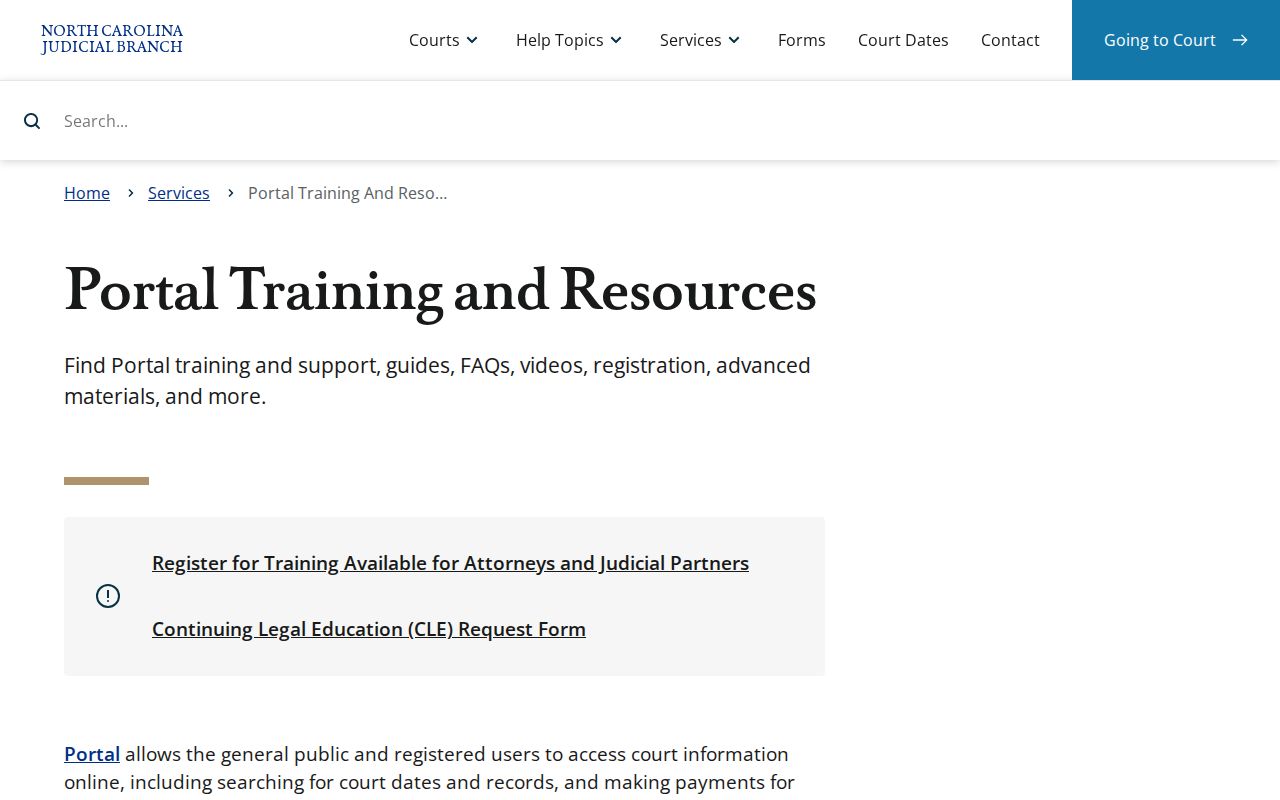
That training view helps distinguish a party search from a hearing or judgment search before a reader opens the live docket.
| Field | Type | Required | Use |
|---|---|---|---|
| Smart Search Criteria | Dropdown | Yes | Choose case, party, business, attorney, or another supported entity. |
| Search Value | Text | Yes | Enter the name or record number tied to the chosen criterion. |
| Case Number | Text | No | An Odyssey number may follow the year, case type, sequence, and county-code format. |
| Location/County | Dropdown | Recommended | Select Union County to reduce statewide same-name matches. |
| Hearing Date | Date range | Contextual | Limits calendar results when searching hearings. |
Certified Union County Case Records
Portal information is not the official court record. North Carolina provides a separate certified single-county criminal record search through form AOC-CR-314. It costs $25 and may be requested from the clerk for oneself or another person. A free courthouse self-service terminal can search statewide court data and may email results, but the terminal result is not certified. These channels answer different needs and should not be treated as interchangeable.
The Judicial Branch court-record search page explains the clerk form, fee, and terminal alternative for Union County case records.
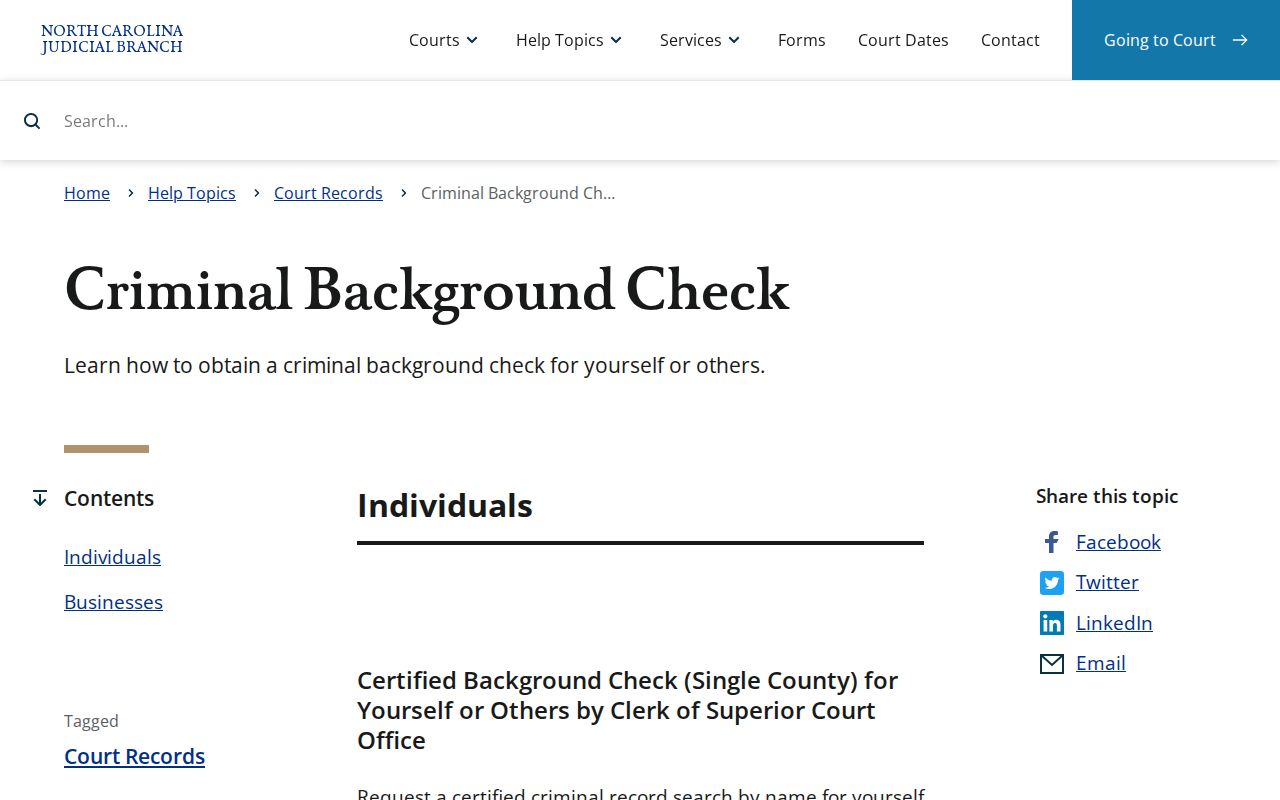
The official page also warns that eCourts Portal should not be treated as the state's formal background-check product.
Mail and counter payment methods differ. The clerk accepts a certified check or money order by mail; in-person payment can include credit card, cash, certified check, or money order. For a particular pleading, judgment, or older file, ask about the current copy and certification charge because a Union County per-page schedule was not located in the reviewed sources.
What a Criminal Case File Contains
A Union County criminal case file records judicial action, not merely the allegation reported at arrest. The Portal Case Summary acts as a Register of Actions. Depending on case type and access level, it may show parties, attorneys, charges, hearings, events, judgments, financial amounts, and public documents. The signed judgment or certified copy controls when an online summary and paper file differ.
| Case Number and Court | Identifies the Odyssey file, Union County location, case type, and trial division. |
|---|---|
| Charging Document | Shows the offense prosecutors filed, which may differ from the arrest allegation. |
| Docket Entries | Lists motions, filings, notices, and other events in date order. |
| Hearing Dates | Provides scheduled or completed settings, courtroom, and judicial officer when public. |
| Disposition and Judgment | Records dismissal, acquittal, guilty outcome, or another final court action. |
| Sentence and Conditions | States the punishment and court-ordered terms shown in the judgment. |
Identifiers should be matched carefully. A sheriff arrest number, citation number, and Odyssey court record number may describe related events without being the same number.
Reading Union County Case Events
Case status makes more sense when each term is tied to a distinct stage. A dismissal ends the filed charge without a guilty finding, but it does not by itself erase every earlier police or booking record. An acquittal is a not-guilty result after adjudication. A judgment records the court's final action and, after conviction, the sentence.
- Arraignment
- The stage at which the charge is stated and a plea is entered in the trial court.
- Indictment
- A grand jury's formal felony charge that can place the matter in Superior Court.
- Register of Actions
- The dated sequence of public docket events in the eCourts Case Summary.
- Disposition
- The outcome of a charge, such as dismissal, acquittal, or conviction.
A missing disposition is not proof that a case remains open. It can reflect a lag, mismatched identifiers, a restricted record, or an incomplete repository transmission. Check the Union County clerk file before drawing a conclusion.
Criminal Case Stages in Union County
Each stage creates a different set of court entries. Law enforcement first supplies an arrest report or citation. A magistrate or judge addresses the first appearance and release terms. District Court may resolve a misdemeanor or record preliminary felony steps. The prosecutor can amend or decline allegations, and a grand-jury indictment can move a felony into Superior Court. Motions, plea negotiations, trial, and judgment follow according to the case.
Case flow: Charges Filed → Arraignment → Pretrial → Plea or Trial → Disposition → Sentencing
Union County Treatment Court Records
Union County operates three treatment-court programs for participants with substance-use or mental-health needs. The team can include judges, district attorneys, probation officers, a court coordinator, providers, and law enforcement. Published expectations include treatment, weekly support or prosocial activity, random or weekly drug testing, and meetings with the coordinator and probation officer.
Progress may earn incentives, while noncompliance can produce sanctions. Those actions remain tied to a person's court and supervision records. There is no separate public treatment-court search. Start with the Union County criminal case number in eCourts, then ask the clerk which public program-related filings or orders belong to the official file. Medical and treatment details do not become public simply because a case appears online.
Union County and Federal Cases
State and federal criminal dockets live in separate systems. Union County state charges appear through the clerk and eCourts. A federal prosecution from the county belongs to the Western District of North Carolina and is searched through PACER. The nearest federal division is in Charlotte. PACER requires an account and generally charges $0.10 per page, with most case-specific documents capped at $3 and quarterly charges of $30 or less waived.
The official North Carolina eCourts overview shows the statewide court platform used for Union County case records.
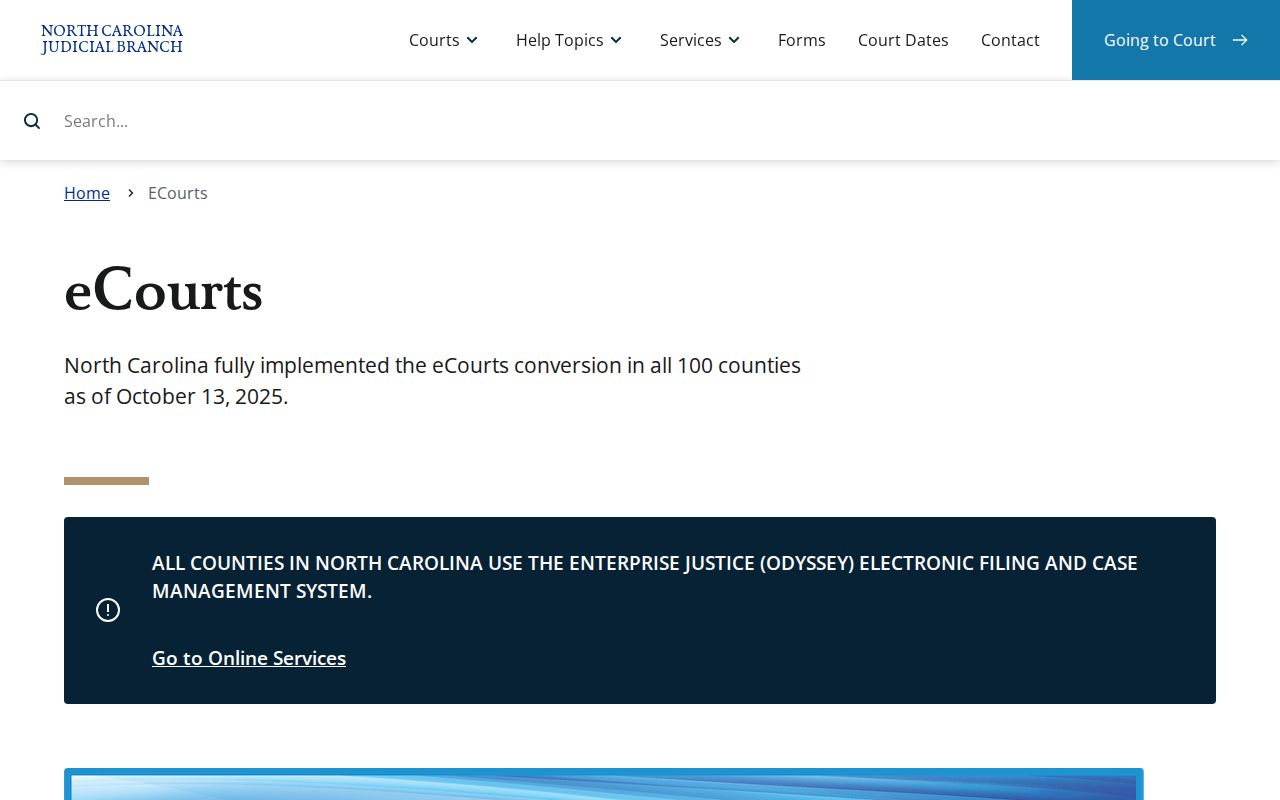
Its statewide scope does not merge federal filings into a North Carolina state case summary.
Union County joined the Odyssey system in October 2024. North Carolina completed rollout to all counties in October 2025. That local milestone explains why recent Union County court cases now share the same statewide Portal structure, while older or unavailable documents may still require help from the clerk. A migration date should never be read as the first year that the underlying court files existed.
The PACER service is the separate account-based source for federal dockets and filed documents.
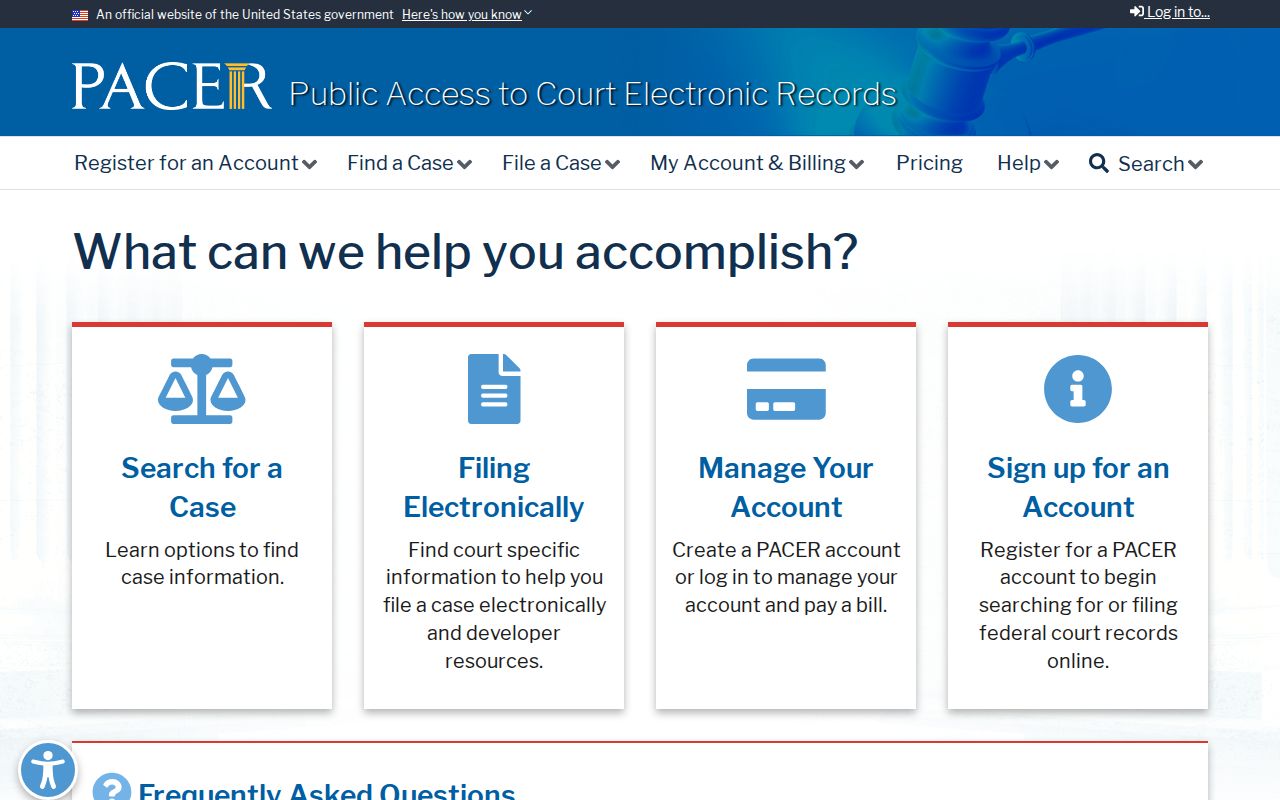
A federal docket should not be inferred from a Union County state search with no result.
Access Rules for Case Records
G.S. 7A-109 generally opens clerk-held court records to inspection unless another law restricts access. Public Portal views still omit confidential data. Juvenile files, expunged matters, sealed information, protected identifiers, and some documents will not appear merely because a name search is possible. The public view also does not validate or display Social Security numbers.
For an older or missing Union County case record, contact the Clerk of Superior Court with the party name, approximate year, charge, and case number if known. The counter is at 400 North Main Street, Monroe, NC 28112, open 8:30 a.m. to 5:00 p.m. weekdays. Mail goes to PO Box 5038, Monroe, NC 28112, and the main number is 704-698-3100.
When the question begins with an arrest, compare the filing and outcome in the Union County arrest search context with the controlling court record. The two records may share dates and charges, but each has its own custodian and update cycle.